
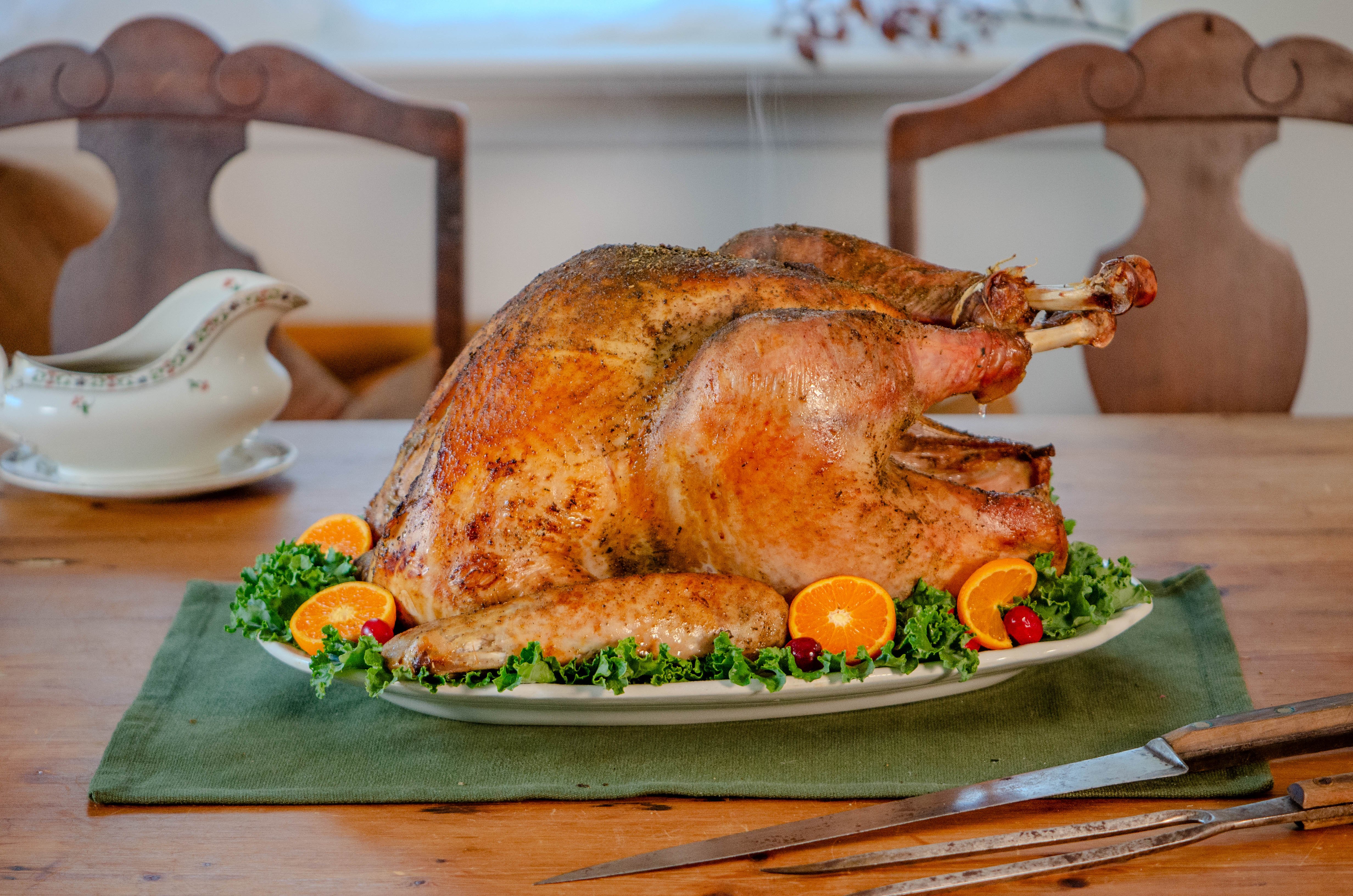
How to Cook a Pasture Raised Turkey
Turkey is the foundation of Thanksgiving dinner for many American families. And that comes with a heaping helping of stress — how long does a turkey take to defrost, what is the bag inside the bird, and how long does it take to cook? What about gravy? How do I carve it? Don’t worry — we’ve got you covered!
A pasture-raised turkey is quite different from a conventional, factory-farm produced bird in how it cooks and how it ultimately tastes. The difference comes down to how the birds are raised, what they eat, how much space they have, and how quickly they grow, which ultimately influences how they cook and taste.
The biggest distinction is that pasture-raised turkeys have access to outdoor pastures where they can move around and forage. Conventional turkeys are raised in large, enclosed poultry houses and are typically fed a commercially formulated, grain-based diet designed to promote rapid growth and produce a consistent bird.
Pasture raised birds typically have darker meat, fuller flavor, and less fat.
- More pronounced flavor: Depending on breed, age and diet, the meat of a pasture-raised bird often has a deeper, more traditional poultry flavor.
- Firmer texture: Pasture-raised birds that are more active often develop firmer muscle tissue.
- Dark meat: Thighs and legs may have a more robust, developed flavor and the flesh, even when fully cooked, can appear slightly pink.
- Depending on the breed, it may have differently colored skin or even freckles. This does not affect the flavor or quality of the bird.
How Much Turkey Do You Need?
A useful starting point is about 1¼ pounds of whole turkey per person. Increase that amount if leftovers are part of the plan. For a gathering of eight, for example, a bird around 10 pounds is a reasonable baseline; choosing a little larger gives you more leftovers. Remember that a whole bird includes the bones and it loses moisture when cooking, so count on roughly 50% of the sold weight is meat.
How to Defrost a Turkey
White Oak Pastures pasture-raised turkeys are sold frozen. Refrigerator thawing is the safest and easiest method: leave the turkey wrapped, place it on a rimmed tray to catch any drips, and keep the refrigerator at 40°F or below. Allow about 24 hours for every 4 to 5 pounds.
- 8-12 pounds: 1 to 3 days
- 12-16 pounds: 3 to 4 days
- 16-20 pounds: 4 to 5 days
- 20-25 pounds: 5 to 6 days
Once thawed in the refrigerator, the turkey can remain refrigerated for another 1 to 2 days before cooking. Do not thaw a turkey at room temperature. If using the dry brine, the brine can be applied on the last day of thawing.
What is Dry Brining?
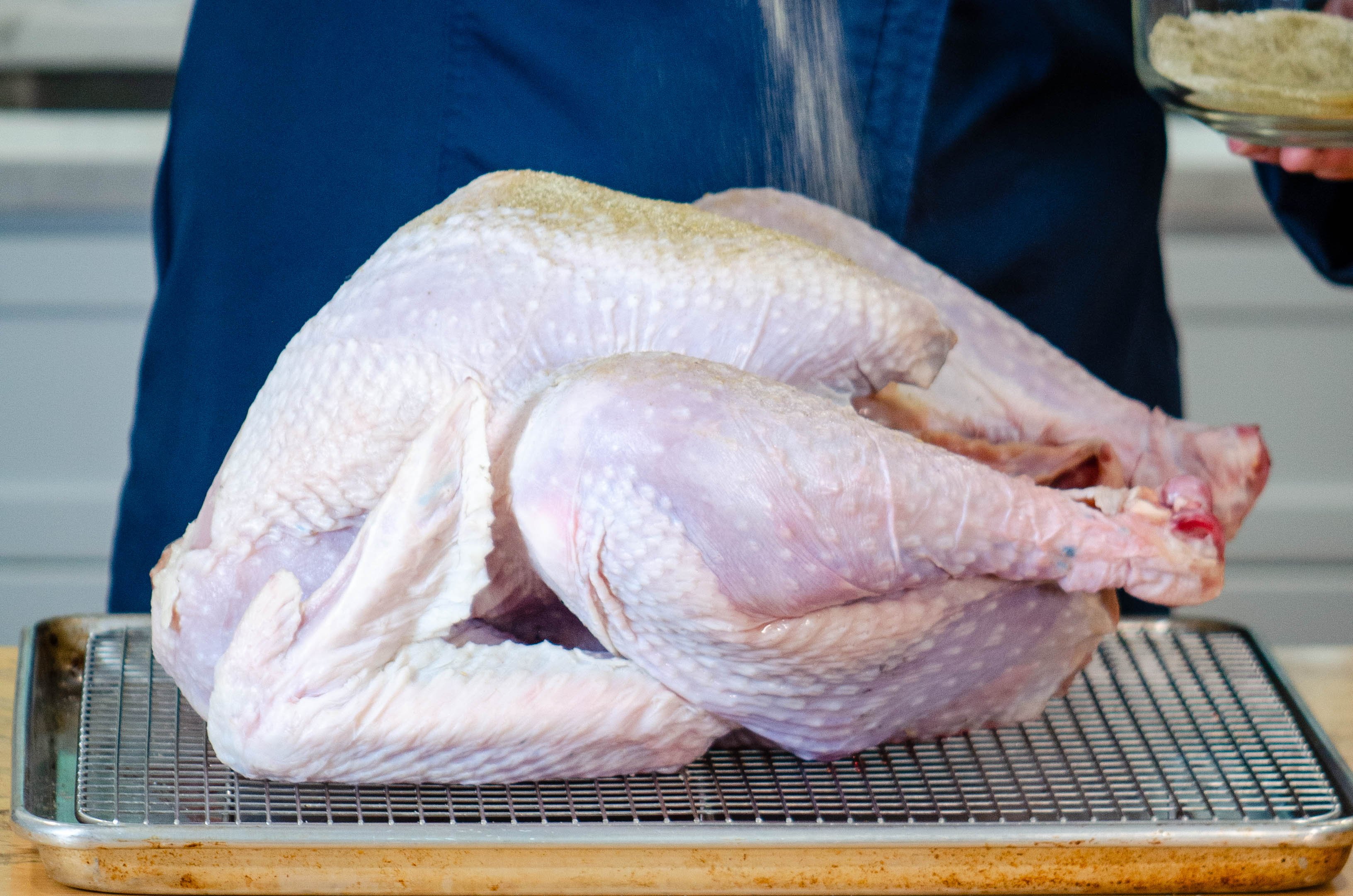
Dry brining is a technique where salt (often with herbs or spices) is rubbed directly onto meat and left to rest. The salt pulls moisture out through osmosis, forms a natural brine on the surface, and then diffuses back into the meat. This seasons the meat throughout, enhances moisture retention, and promotes better browning during cooking. This dry brine is a combination of salt, sugar, and poultry seasoning. Poultry seasoning is a classic, savory herb blend most famous for Thanksgiving turkey and bread stuffing, though it works well across chicken, pork, soups, and vegetarian dishes. Apply the dry brine a minimum of 12 and up to 24 hours before roasting the bird.
What’s in the Bag?
Each bird is accompanied by a bag containing a liver, heart, gizzard, and neck. Add the neck when roasting the bird, then add it to the gravy while it simmers. The organs are best used in another application such as Old-Fashioned Giblet Gravy.
What about the Gravy?
Thanksgiving is unimaginable without gravy. For some, gravy is in the pantheon of recipes shrouded in mystery, seemingly unattainable to mere mortals. But that’s a myth! Gravy is the most basic of sauces with three ingredients (plus salt and pepper): fat, often the meat drippings; starch, such as flour, chickpea flour, or cornstarch; and stock. My pro tip is to make the gravy up to 5 days in advance and add the flavorful pan drippings and cooking juices when reheating the gravy. It also lightens up the workload on Thanksgiving Day.
Cooking a pasture-raised turkey doesn't have to be complicated, but it does benefit from a slightly different approach. Because these birds tend to be leaner and cook more quickly, keeping an eye on the internal temperature is key to a moist, flavorful result. Plan ahead, give the bird time to thaw and dry brine, and don't skip the resting period before carving. The payoff is a beautifully roasted turkey with rich, traditional poultry flavor that's well worth bringing to your Thanksgiving table.
Here's my recipe, including a make-ahead gravy, to help make the big day a little easier.
Pasture-Raised Thanksgiving Turkey and Gravy
Serves 10 to 12
For the Make-Ahead Gravy (Makes 4 cups)
1 quart reduced-fat low-sodium chicken bone broth, stock, or homemade turkey stock, warmed
4 tablespoons pure olive oil or unsalted butter
4 tablespoons all-purpose or chickpea flour, for gluten free
Heart, gizzard, and liver, for Old-Fashioned Giblet Gravy, optional
3 hard-boiled eggs, peeled and chopped, for Old-Fashioned Giblet Gravy, optional
1 cup homemade roast turkey cooking juices and drippings, fat removed
½ teaspoon coarse kosher salt
¼ teaspoon freshly ground pepper
For Roasting the Turkey
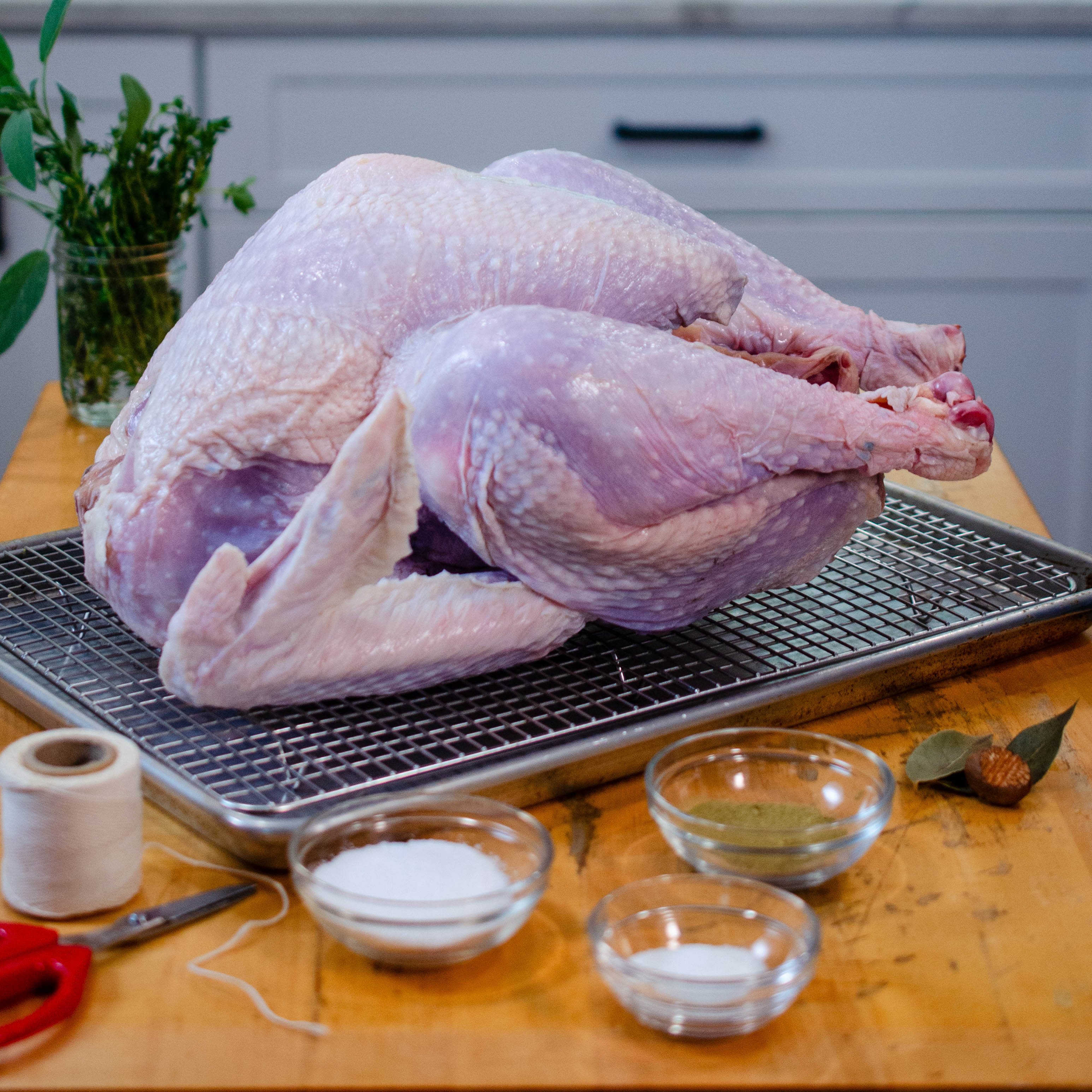
3 tablespoons kosher salt
4 teaspoons granulated sugar
1 tablespoon poultry seasoning
1 (12- to 14-pound) pasture-raised turkey, neck and giblets removed
1 onion, coarsely chopped
1 carrot, coarsely chopped
2 stalks celery, coarsely chopped
2 bay leaves, preferably fresh
½ cup unsalted butter (1 stick)
For the Make Ahead Gravy:
Heat the oil in a saucepan over medium-high heat until shimmering. Add the flour and cook, stirring with a wooden spoon, until fully incorporated. Cook, stirring constantly, until the mixture is light brown, about 3 minutes.
Slowly whisk in the stock, whisking vigorously to combine and avoid lumps. Bring to a boil over high heat, then reduce heat to simmer and cook until the gravy has thickened, about 10 minutes. (If the gravy has lumps, it’s possible the stock was not warmed sufficiently. To remove the lumps, you can strain with a sieve or puree using an immersion blender or transfer the gravy to a blender.)
Let cool and store gravy in a sealable container in the refrigerator for up to 5 days.
To Dry Brine the Turkey:
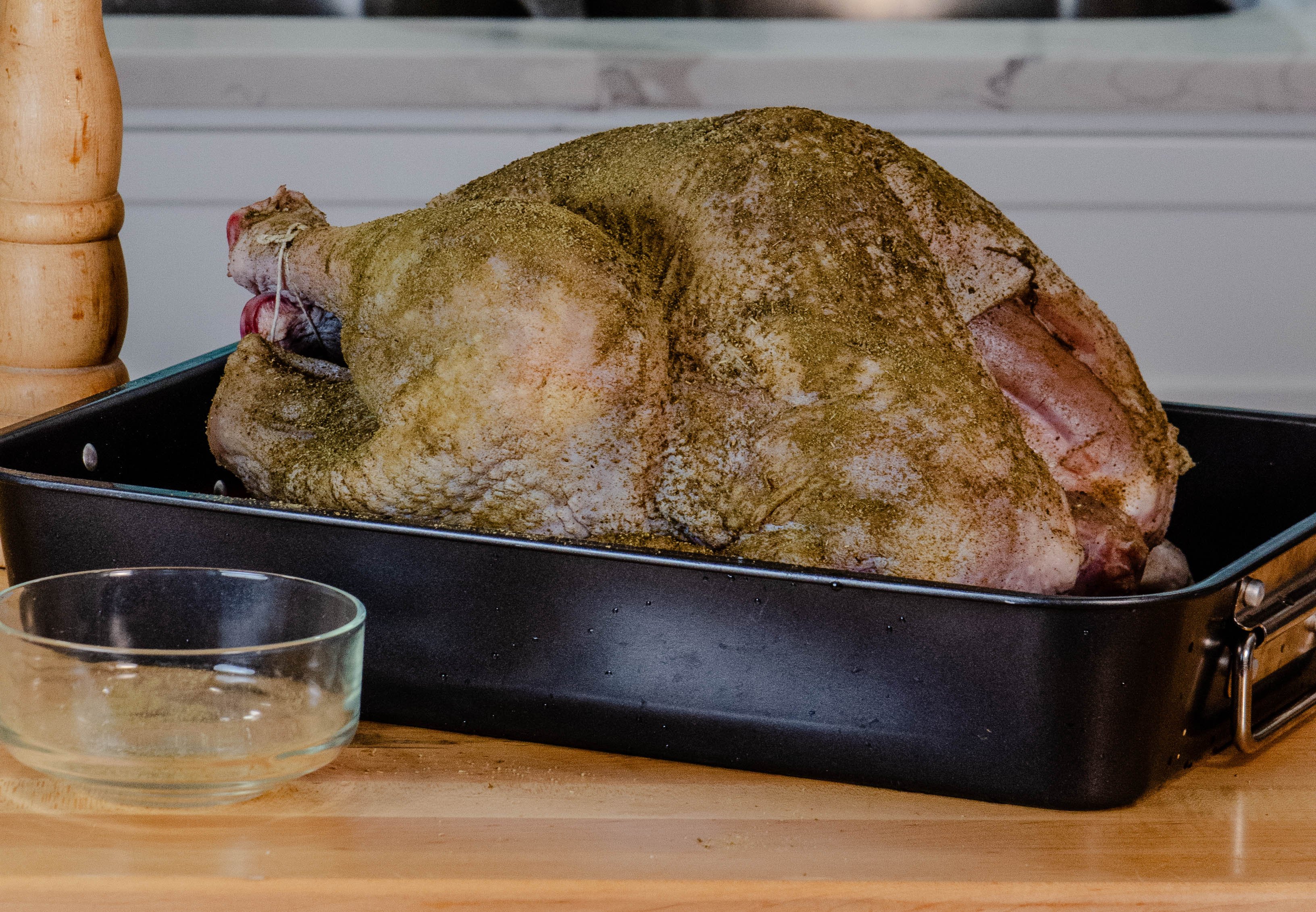
Combine kosher salt, sugar, and poultry seasoning in a bowl. Place a 12- to 14-pound turkey, breast side up, on the counter or in the sink. Sprinkle the seasoning all over the surface and in the cavity of the bird. Tuck wings behind back and tie legs together with kitchen twine.
Place turkey on a wire rack set in a rimmed baking sheet and refrigerate, uncovered, for 12 to 24 hours.
At least 30 minutes before roasting turkey, adjust oven rack to lowest position and preheat to 350°F and remove the turkey from the refrigerator. When ready to cook, transfer the bird to a roasting pan. Add the turkey neck, onion, carrots, celery, bay leaves and butter.
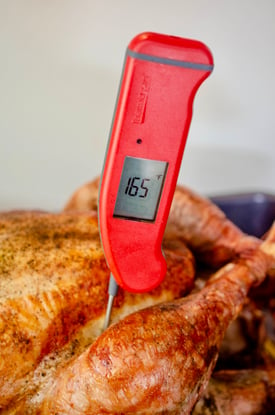 Cover turkey breast with a double layer of aluminum foil. Transfer to the oven and roast for 30 minutes. Remove the foil and baste with the buttery cooking juices. Continue to cook until a minimum internal temperature of 165 °F as measured with an instant read thermometer.
Check the internal temperature in the innermost part of the thigh and wing and the thickest part of the breast.
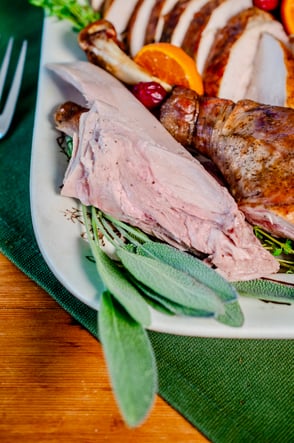
Important Note:
When carved, the area closest to the thigh bone may appear undercooked and the meat will be pink.
Pasture-raised turkey cooks at about 8 minutes per pound whereas a conventional bird is closer to 13 minutes per pound. Pasture-raised turkeys cook quicker.
- 8-12 pounds - 1 hour 4 minutes to 1 hour 36 minutes.
- 12 - 16 pounds - 1 hour 36 minutes to 2 hours 13 minutes.
- 16-20 pounds - 2 hours 13 minutes to 2 hours 40 minutes.
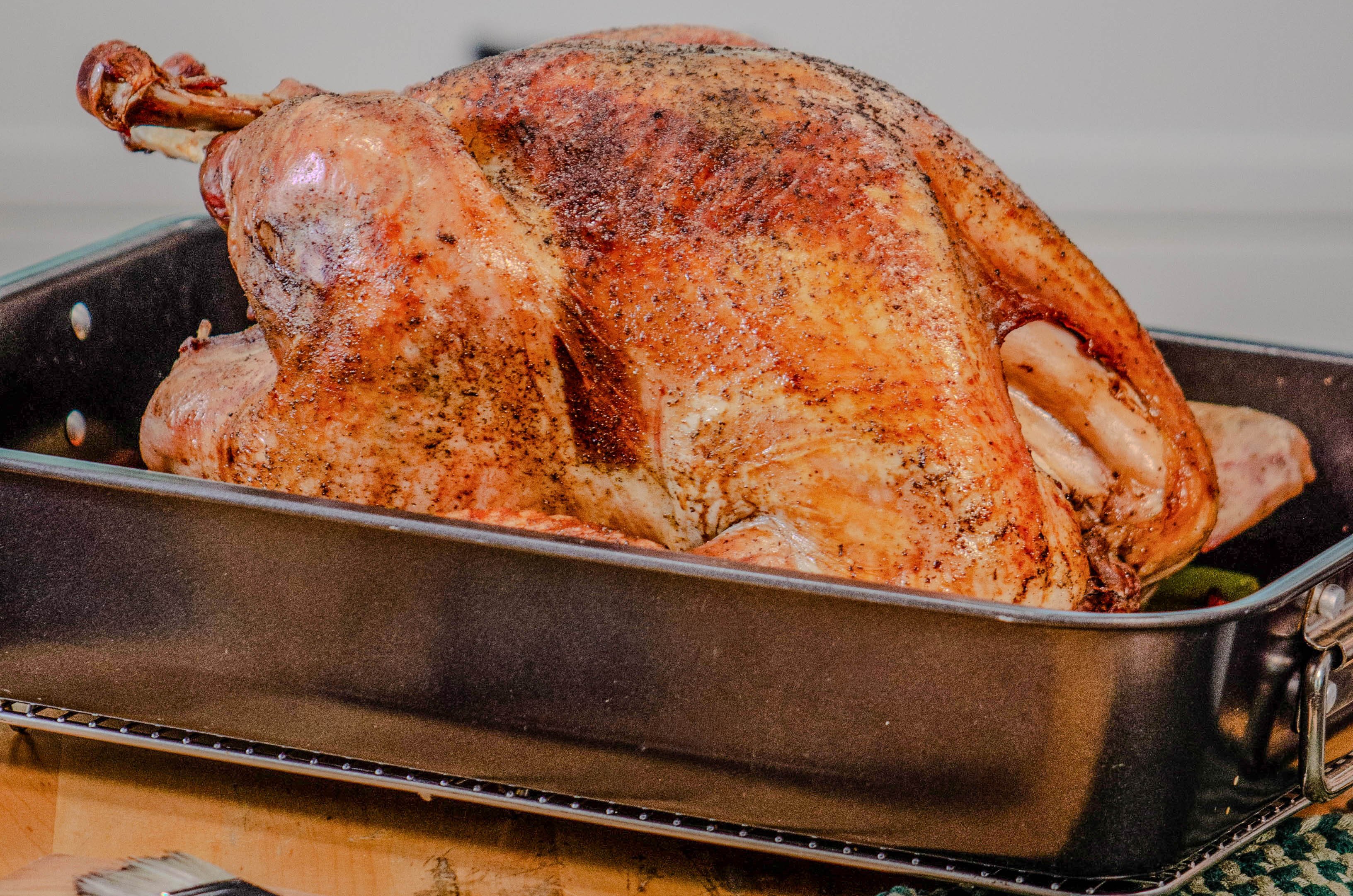
Using spatula, loosen turkey from roasting pan; transfer to carving board and let rest, uncovered, for 30 minutes.
To Finish the Gravy:
If preparing Old-Fashioned Giblet Gravy, place the heart and gizzard in a saucepan and cover with water. Bring to a boil, then reduce the heat to simmer. Cook for 45 minutes then add the liver and cook for an additional 15 minutes. Strain, discarding the water. Let cool then chop into small pieces. Set aside.
When ready to finish the gravy, place it in a pot over medium heat on the stove and heat, stirring occasionally, until simmering.
While the turkey rests, using a wooden spoon, scrape up any browned bits from the bottom of the roasting pan. Strain the mixture through a fine-mesh strainer set over a bowl.
You can add the cooked vegetables to the gravy with the drippings, serve them on the side, or discard.
Add the cooking juices to the simmering gravy. Add the roasted neck and let it simmer in the gravy for added flavor. Add reserved chopped organ meats and hard-boiled eggs, if using for for Old-Fashioned Giblet Gravy.
Cook, stirring occasionally, until the gravy thickens enough to coat the back of a spoon. To test, dip a metal spoon into the gravy and run your finger across it. If the gravy holds the trail of your finger, it’s thickened enough. If the gravy is loose, it needs more cooking. Remove the neck. Taste and adjust for seasoning with salt and pepper. Serve immediately.
How to Carve a Turkey
When carving a turkey, let the bird guide the way. This may sound a bit odd, but the parts should separate at the joints with little or no effort. If the bird is fighting you, the knife is not in the right place.
Place the turkey breast side up on a cutting board, preferably with a moat to catch the juices. If the bird is hot, I use a clean kitchen towel to protect my hand and fingers instead of a carving fork, but you can use a fork or a set of tongs. I prefer to use the towel because it doesn’t tear the skin.
Pull the leg and thigh back to expose the joint that attaches it to the body. Use a sharp knife to sever the thigh from the body, cutting through the separated joint. As you separate the leg, using the tip of the knife, be sure to get the “oyster,” a yummy nugget of delicious dark meat toward the back of the turkey, just above the thigh. Halve the leg quarter into the drumstick and thigh. Repeat the process with the other leg and thigh.
Place each leg quarter on the cutting board, skin side down. Use a chef’s knife to cut through the joint that connects the leg to the thigh. (It should be fairly easy to cut through the joint.) Look for a line of fat, and if the knife meets resistance, your knife is hitting bone and is not placed at the joint, which is easy to carve through. So, reposition the blade slightly and try again.
With the turkey breast still breast-side up on the cutting board, feel for the breastbone, which runs along the top center of the carcass. Begin separating one side of the breast from the body by cutting immediately alongside the breastbone with the tip of your knife. (You are removing the breast from the carcass, not cutting the breast on the carcass.)
Work from the tail end of the bird toward the neck end. When you hit the wishbone, angle the knife and cut down along the wishbone toward the wing, then make a cut between the breast and the wing.Finish separating the breast by simultaneously pulling back on the meat and using short strokes of the knife tip to cut the meat away from the carcass.
Place the whole breast on the cutting board. Slice the breast into 1/4-inch thick slices. (Do the same to remove the breast meat on the other side.)
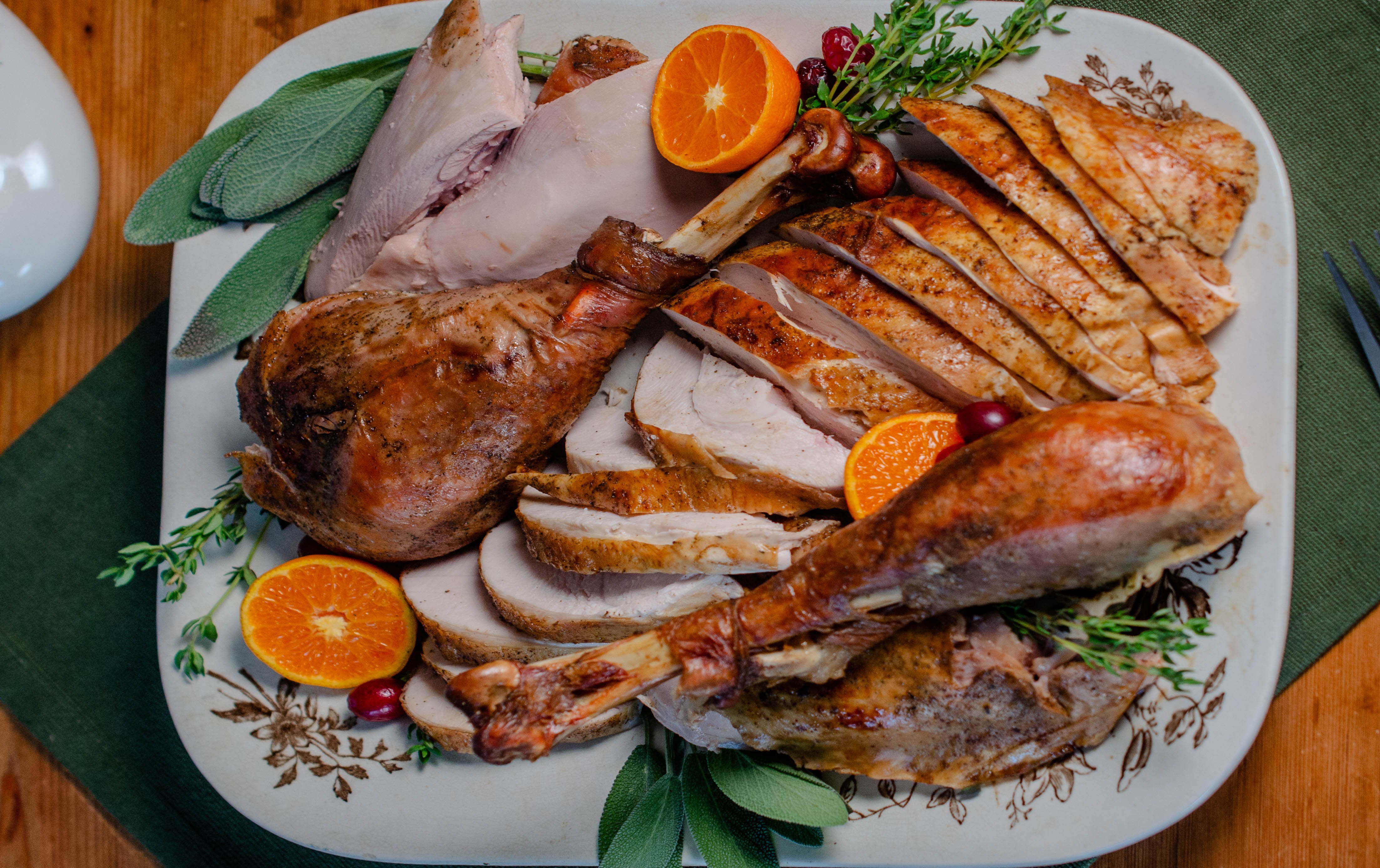
Find the joint where the wings connect to the body and bend until the joint pops apart. Use a sharp knife to sever the wing from the body, cutting through the separated joint. Using a chef’s knife or your hands, remove whatever meat remains on the carcass. (Reserve the carcass for stock.) Arrange the legs, thighs, wings, and meat on a platter, pour over any accumulated juices to moisten the meat, or use in pan sauce, and serve.
This traditional, no-fuss recipe was developed by Chef Virginia Willis especially for White Oak Pastures' pasture-raised, non-GMO, corn-and soy-free turkeys.
Learn more about Virginia here: VirginiaWillis.com